Suburban Racism Pt. 2: Microaggressions and Implicit Bias
By Joshua Boyd
A “Safe” Black Family
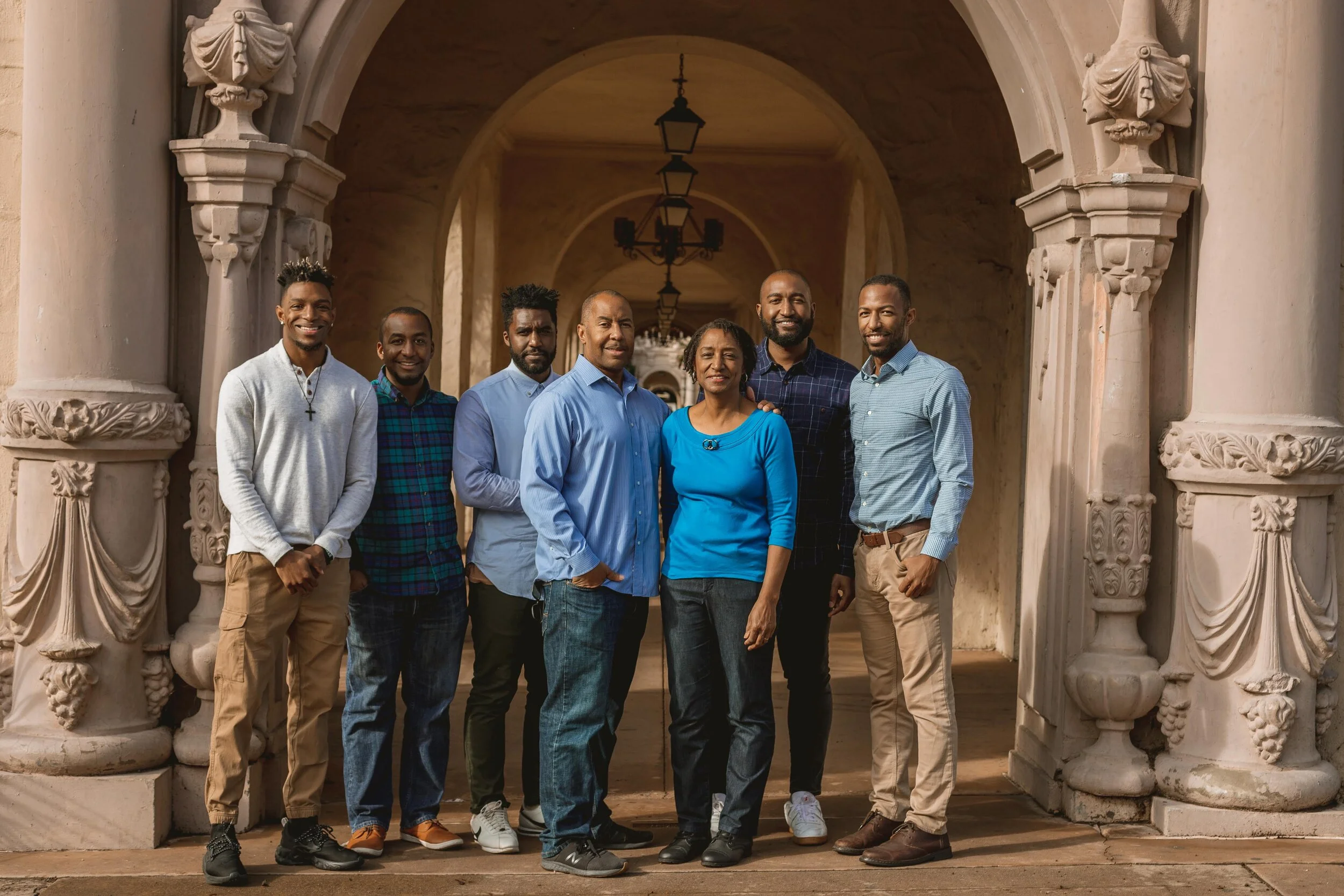
My family in San Diego for Christmas
I was born in Manteca, California, surrounded by a mix of all races. My family didn't always have it easy, but my parents made sure that no matter what we were educated. My mom home-schooled me and my four brothers, and for a time she worked a night shift job to work but still be there for us during the day. My dad worked hard to go from being a cop to working multiple jobs while getting his degrees, and then to getting a Doctorate in education and becoming the president of a community college. We loved going to the library, reading in our free time, and all dabble in writing to this day. Three of us brothers have master's degrees, one is in seminary, and the youngest is on the come up. I don't say that to brag, but to preface this with how some people will see us as an exceptional black family. Some may be thinking that we are a rare breed. That isn't a guess, that's what I've been told directly. If those accolades were from a white family, most would not give it a second thought.
When people meet us they consciously or unconsciously deem us as "safe" black people. That's how I was able to "infiltrate" white circles and households and got to see the most common forms of racism that happen today in suburban America. This is where I have felt like Ron Stallworth, a black man who infiltrated the KKK and "befriended" the grand wizard David Duke over phone calls. On the phone the KKK thought they were talking to a white man, so they told him openly how they felt about other races. Because I was a "safe" black person, many people have told me their thoughts on people of color thinking I was likely to agree with them because I was more like them than their ideas of black people.
While overt racists acts may seem like an uncommon occurrence throughout America's suburbs, microaggressions and implicit biases run rampant.
Microaggressions Are Commonplace In The ‘Burbs
Microaggressions are comments or actions that subtly and often unconsciously expresses a prejudiced attitude toward a member of a marginalized group such as a racial minority. Microaggressions can be a sign of ignorance or incidental racism. I've seen the same people that compliment me for fitting in with them treat my cousins and other people of color with open disdain. Instead of simply sharing a list of microaggressions, I want to share real life incidents and how they made me think and feel afterwards. Every single one of these examples I have heard multiple time in my life:
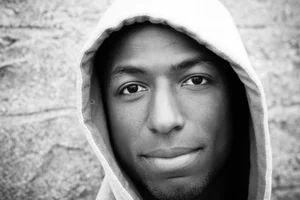
After coaching gymnastics one evening, I overheard a mom tell her white six year old daughter "put your hood down or you look like a thug!", she was telling me that if she saw me in a hoodie she would assume I was a thug. Since then, I never have my hood up in a white area unless it's cold out or everyone else has their hoods up.
In the many times I've heard the phrase I "act like a white person", I was being told that they didn't expect or know a black person could identify with them or be like them. Black people have said this to me too, which tells me I don't fit in with them either. This has led to me feeling like I have to wear a mask based on who I'm with.
I've been told "it's rare for a black family to be so intelligent." This tells me they thought we were breaking racial barriers by being competent enough to earn degrees.
When I’ve been told I "speak so well" after a speech or presentation while my white peers were complimented on the content they shared, it told me that their biggest takeaway was the surprise at a black man articulating his thoughts in proper English.
When friends have said they are "blacker" than me because they listen to more rap music, wear better Nikes, or know the movie Friday better than me, they are telling me they equate blackness with arbitrary stereotypes about black culture.
When someone greets me with a different handshake or calls me "brother" but doesn't do that to other men around us, they're telling me I'm different from the other men in their mind. They may mean well, but it can be emasculating.
There have been numerous times I walk into a new place and notice eyes on me until it's clear I'm with a white person. This tells me that if I didn't have a white person next to me, they would question my presence and intentions. To this day when in certain places I intentionally stand close to or quickly greet a white person I know.
When someone sees my music playlists and says "wow, I didn't think you would listen to this type of music", they are telling me they didn't think black people were also eclectic individuals who can like classical, metal, musicals, rock & roll, Mumford & Sons, The Allman Brothers, or George Strait.
When someone followed a compliment with "you're not like other black people I know", they were telling me if I was like the "others" they would likely have less respect for me.
When I challenge someone's microaggression and they say "I meant it as a compliment" they are telling me they think removing my black identity is a kindness.
Some people refer to microaggressions as "death by a thousand cuts" because they can individually seem harmless. However, hearing these things since the first day I understood English I can confirm those small remarks add up.
You can read more about microaggressions here, here, here, here, and here.
We All Have Implicit Biases
Implicit bias is an unconscious preference or aversion to a person or group of people. It can range from simply having a positive bias towards people that look like your friends from school, to a negative bias of a cop thinking a group of minorities are more likely to be a threat than a group of white people. Negative implicit biases are not always based on race but when they are it is racism.
Implicit bias is not always about race though, and it is something I myself have had to address in my own heart too.
I am a gymnastics coach, and I'll never forget just 7 or 8 years ago when two girls told me they lived in a trailer park on one of the first days of class. I immediately assumed that they would be less intelligent, less respectful, and harder to work with. I saw their parents in the window and had the thought that they are probably hillbillies or rednecks. I didn't necessarily think they were bad people, but I thought less of them. I wasn't going to treat them differently than any other student, but in my mind I still saw them as different and lesser on some level. That is implicit bias. Fast forward a week or two, and these girls quickly became two of my favorites. They were smart, witty, and we had a blast every week. I met their parents and made a point to try to talk to them after every class simply because we always had a great conversation filled with laughter. I had an implicit bias towards people in trailer parks. I believed the stereotypes, but they removed my prejudicial beliefs. Instead of thinking "these girls must be exceptions", I checked my ignorance and realized I held prejudiced beliefs about an entire group of people.
That was a turning point in my life that I will never forget. I understood how easy it must be for someone to look at me and have unconscious assumptions about me. Because of the color of my skin I might be perceived as less intelligent, more likely to write a bad paper, more suspicious in a store, or more likely to be a threat. That is not always racism necessarily, but always ignorance. Ignorance is the seed for many evils. Ignorance is the foundation for many acts of bigotry, violence, and racism.
Knowing people hold these implicit biases towards blacks I make a point to present myself as "safe" when in new places. I dress nicer than I normally would when going to new places I might frequent. I make a point to greet staff at classier stores. I give better tips at new bars so they know I'm not cheap. I intentionally make references to things they may not expect me to like or know such as The Andy Griffith Show, country music, the Bible, or mention my job as a counselor.
You may be thinking I'm just paranoid or overly cautious but I know many black people that do similar things in the suburbs. I have had numerous conversations about the feeling that we are representing black people as we know we make up around 3% of the population where I live. Part of me sees it as an honorable responsibility to represent my race, but often times it just feels like a burden.
How To Work Against Bias, Bigotry, and Racism
To help you understand how to overcome racist beliefs, prejudices, and implicit bias, I want to openly admit I used to have implicit bias and bigoted ideas about members of the LGBTQ+ community. It took years of mental work to decondition myself from what I was taught by members of my church communities. I want to emphasize here that my thoughts and feelings about being LGBTQ+ were learned, and this could be unlearned. I had zero issues with one of my old gymnastics coaches until I found out he was gay. After that, every practice was awkward and any time we high fived or he gave me a pat on the back I was uncomfortable. It was ignorance passed down from the people and pulpits at church. I liken my transformation from a bigot to an LGBTQ+ ally to the process of becoming an anti-racist.
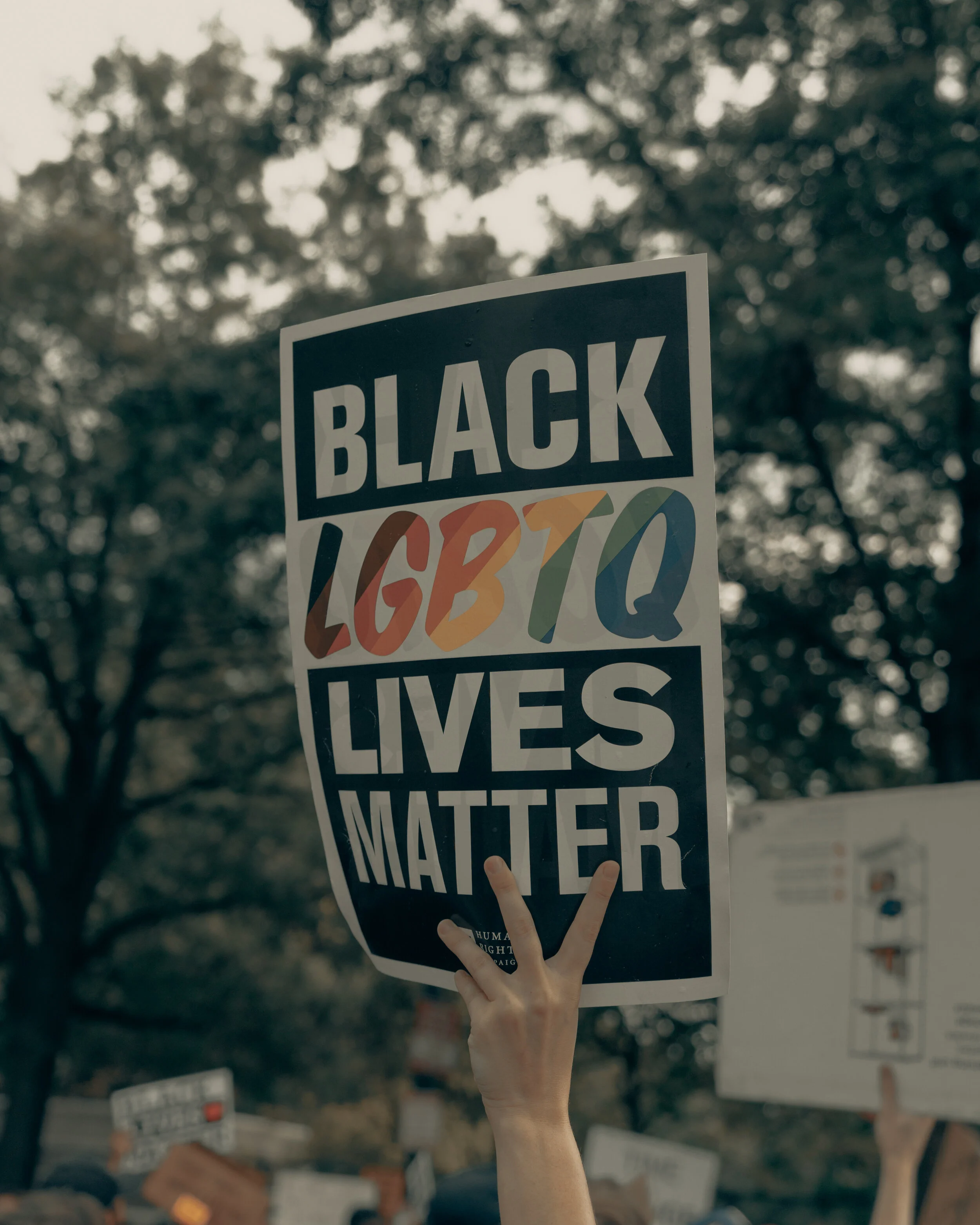
It began with conversations. Me and a gay acquaintance (now close friend) started a now defunct Facebook group for Christians and members of the gay community to have open, civil discussions. I read articles and researched history. I had very uncomfortable, vulnerable conversations with gay friends who were gracious enough to not dismiss me but educate me. I had to actively challenge the cognitive dissonance I was experiencing while listening to them and remaining silent. I had to go back to the Bible and see if the prejudiced beliefs I had were from scripture or from what I was taught outside of scripture by other Christians. For years, I still had implicit bias and negative ideas of someone that is gay, but I would actively recognize and dismiss those thoughts.
While in the end some of us may have to agree to disagree when it comes to what is "sin" and what isn't, one thing I will never agree with is that Jesus would treat the LGBTQ+ community the way our "Christian nation" and churches have historically and still do to this day.
I hope we can all agree, regardless of your moral or spiritual beliefs, that people of color and minority groups have historically been mistreated, oppressed, violated, imprisoned, and killed in America simply for existing.
If you are looking to remove your own implicit biases, racism, or recognize your privilege it will not be a comfortable process. If you want to address these in your city you will have to get in the crawlspaces of your mind and sit there for awhile. If you want to end implicit bias, bigotry, and racism, it will be a grimy process. You have to clear out your heart first. Stop and listen to views and voices that make you uncomfortable and sit in that discomfort instead of trying to ignore or escape it. Educate and change yourself, then your family, then your neighbors, then your city, then our nation. March, protest, donate, support, and don't stop until the work is done.
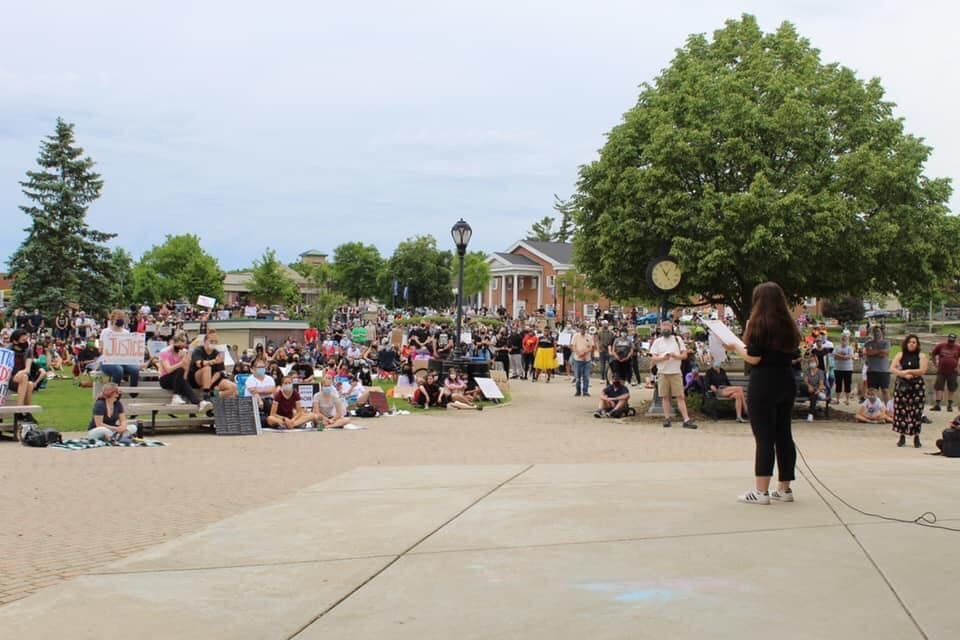
I love my hometown. Batavia is a beautiful place, and I have been moved by the amount of support against racism I have seen. Our town recently had a rally against racism and police brutality and the amount of people that showed up made me emotional. There were powerful speeches and meaningful conversations.
I have no ill will towards my hometown, but all of this is to say that even in "good cities" racism is prevalent. Until we see it and acknowledge it for what it is we will not be able to combat it. It is a fight that is long overdue.